| Types of Snowflakes |
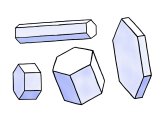 Simple Prisms Simple PrismsA hexagonal prism is the most basic snow crystal geometry (see the Snowflake Primer). Depending on how fast the different facets grow, snow crystal prisms can appear as thin hexagonal plates, slender hexagonal columns (shaped a lot like wooden pencils), or anything in between. Simple prisms are usually so small they can barely be seen with the naked eye. |
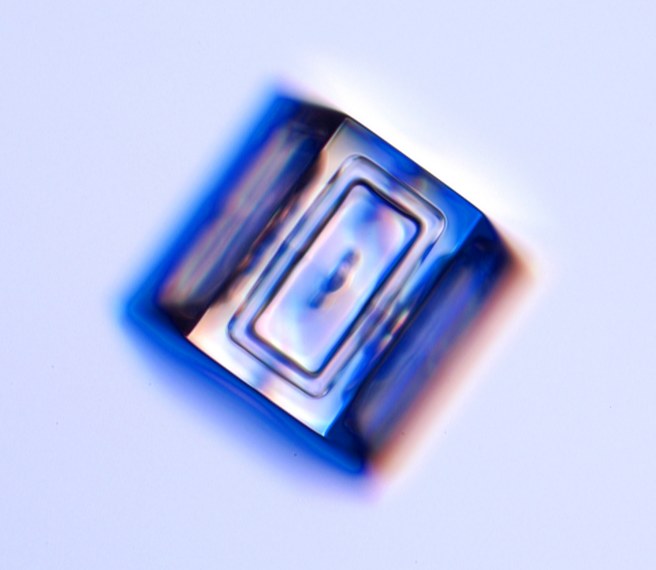 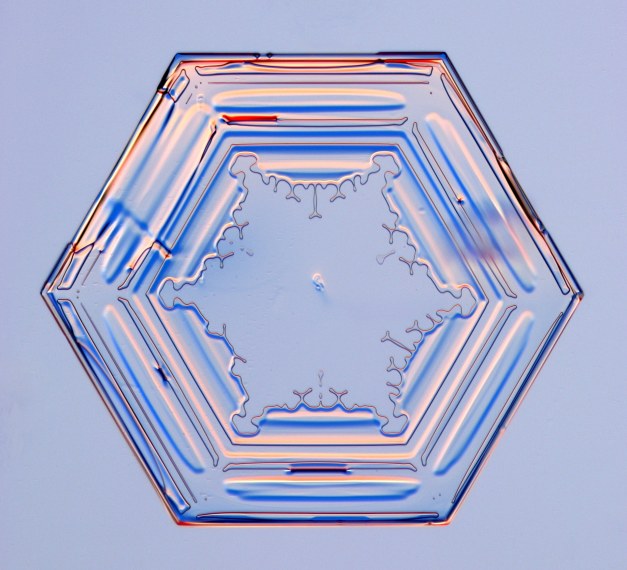 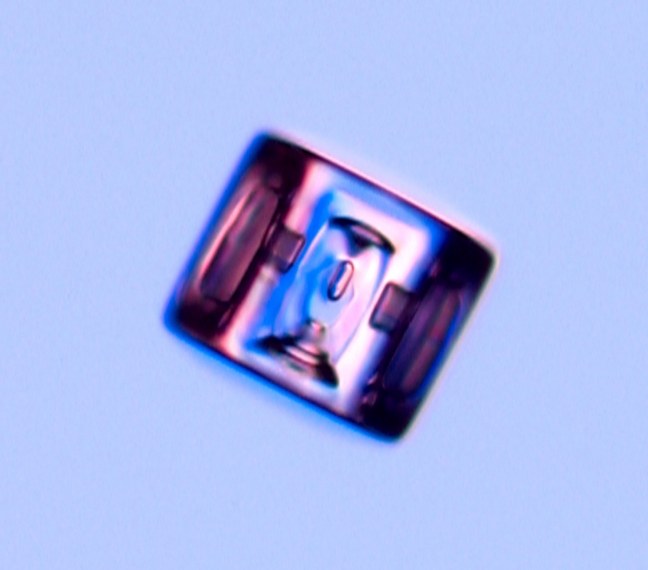 The examples at right show two stubby prisms and one thin plate. Snow crystal facets are rarely perfectly flat, being more typically decorated with various indents, ridges, or other features The examples at right show two stubby prisms and one thin plate. Snow crystal facets are rarely perfectly flat, being more typically decorated with various indents, ridges, or other features |
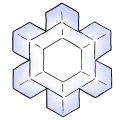 Stellar Plates Stellar PlatesThese common snowflakes are thin, plate-like crystals with six broad arms that form a star-like shape. Their faces are often decorated with amazingly elaborate and symmetrical markings. |
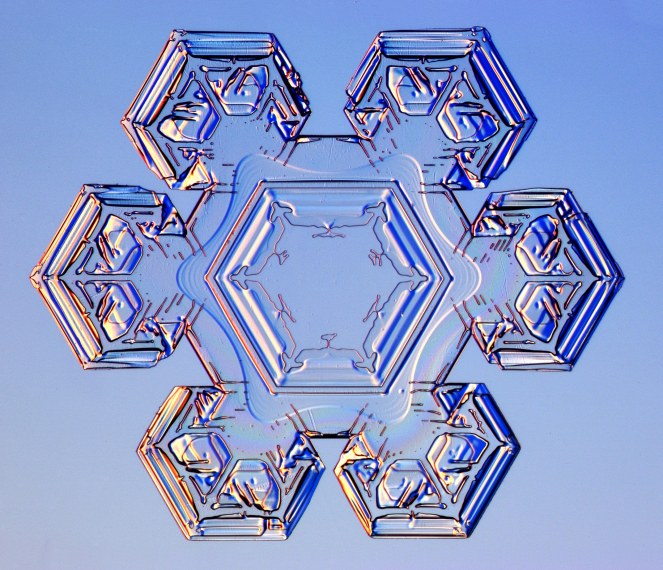 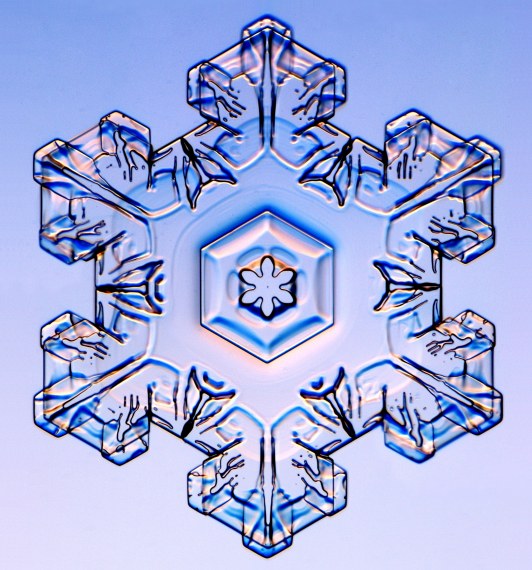 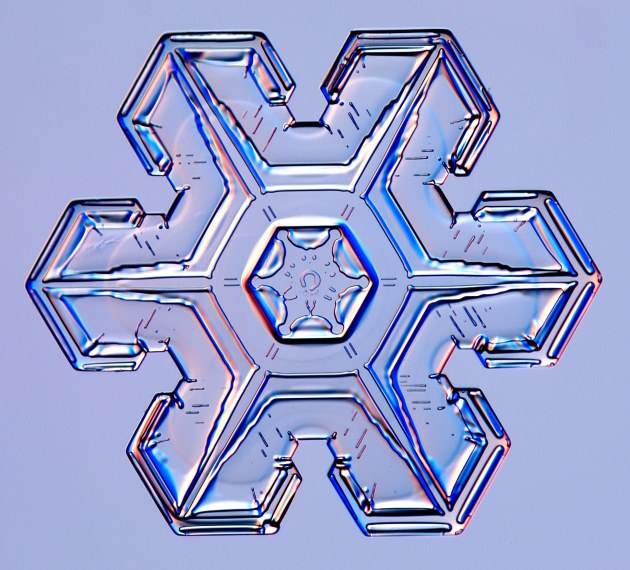 Plate-like snowflakes form when the temperature is near -2 C (28 F) or near -15 C (5 F), Plate-like snowflakes form when the temperature is near -2 C (28 F) or near -15 C (5 F), |
 Fernlike Stellar Dendrites Fernlike Stellar DendritesSometimes the branches of stellar crystals have so many sidebranches they look a bit like ferns, so we call them fernlike stellar dendrites. These are the largest snow crystals, often falling to earth with diameters of 5 mm or more. In spite of their large size, these are single crystals of ice -- the water molecules are lined up from one end to the other. |
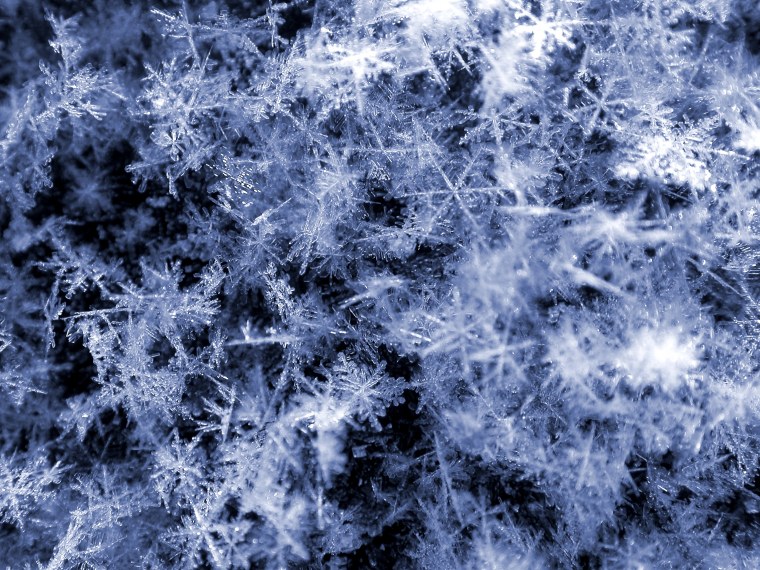 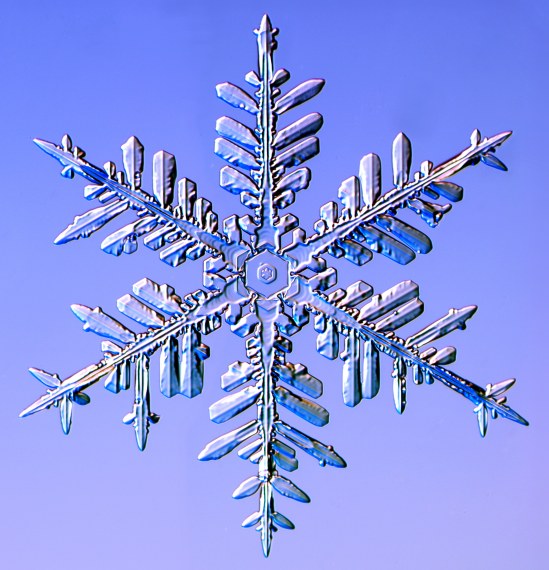 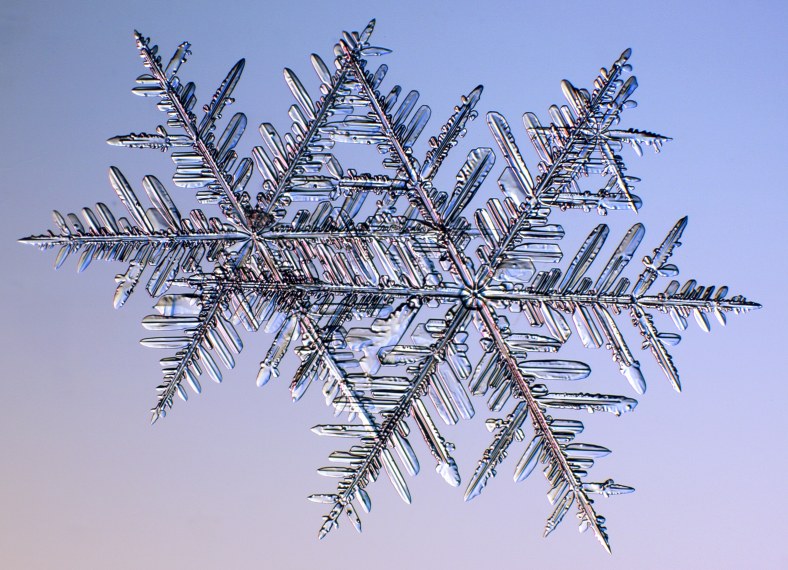 Some snowfalls contain almost nothing but stellar dendrites and fernlike stellar dendrites. It can make quite a sight when they collect in vast numbers, covering everything in sight. Some snowfalls contain almost nothing but stellar dendrites and fernlike stellar dendrites. It can make quite a sight when they collect in vast numbers, covering everything in sight. The best powder snow, where you sink to your knees while skiing, is made of stellar dendrites. These crystals can be extremely thin and light, so they make a low density snowpack |
 12-Sided Snowflakes 12-Sided SnowflakesSometimes capped columns form with a twist, a 30-degree twist to be specific. The two end-plates are both six-branched crystals, but one is rotated 30 degrees relative to the other. This is a form of crystal twinning, in which two crystals grow joined in a specific orientation. |
+ نوشته شده در سه شنبه بیست و هشتم اسفند ۱۳۸۶ ساعت 0 توسط فرهاد راسخ
|